
Dongguan, Guangdong, China – November 18, 2026
How to Customize Christmas Ornaments, Pins, Medals and Keychains as One Collection
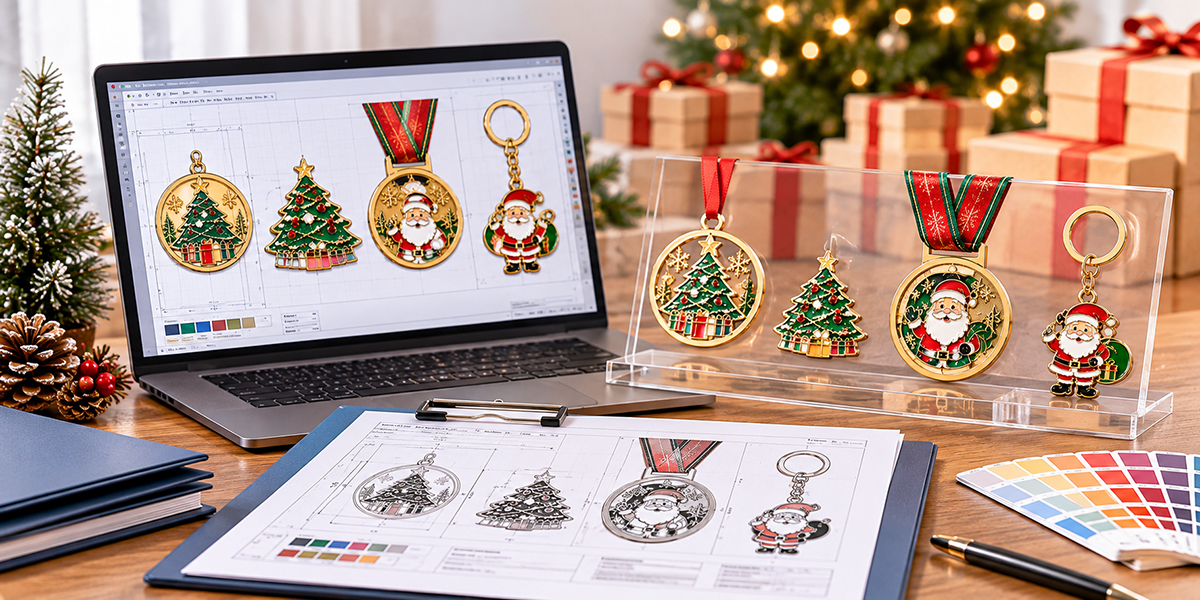
A coordinated Christmas collection should look visually connected without forcing identical artwork onto products with different functions. A Christmas ornament hangs from a tree, a pin attaches to clothing, a medal is presented with a ribbon, and a keychain is handled and carried every day. Simply copying one finished design across all four products can result in unsuitable proportions, unclear details, or poorly positioned attachments.
Creating a successful custom metal Christmas collection requires balancing two important goals: maintaining a consistent visual identity and making each product suitable for its intended use.
The process starts with a shared visual concept, followed by product-specific adjustments to artwork, construction, attachments, finishes, dimensions, and packaging. The following guide explains how to coordinate these details when customizing Christmas ornaments, pins, medals, and keychains as one collection.
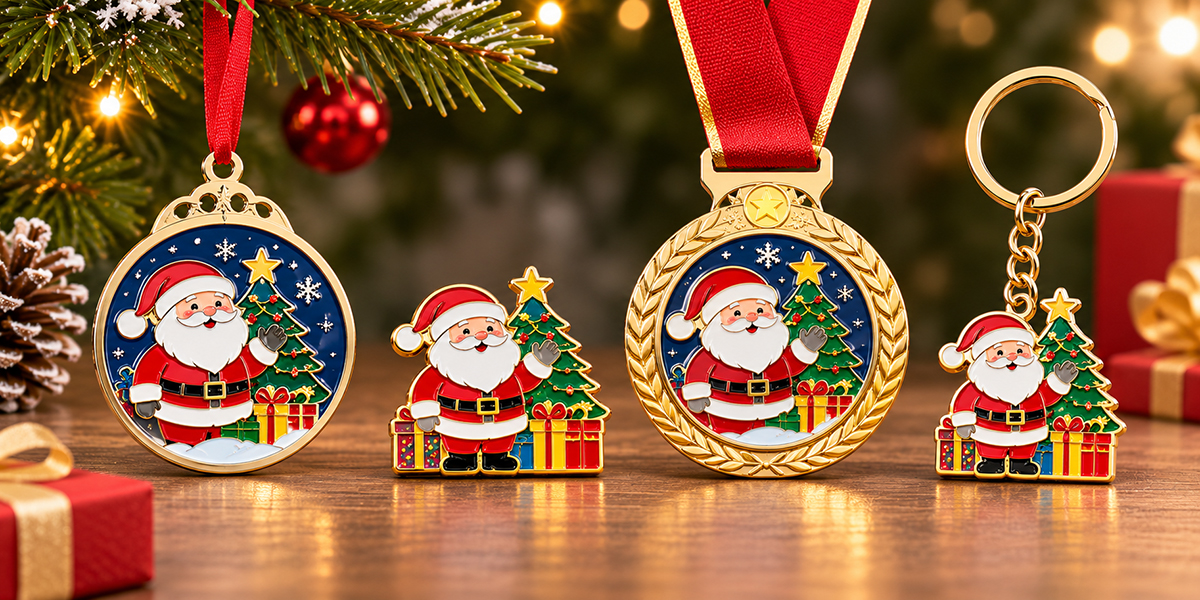
1. Create a Collection Style Before Developing Individual Products
Before preparing separate artwork for each product, establish a visual system that connects the entire collection.
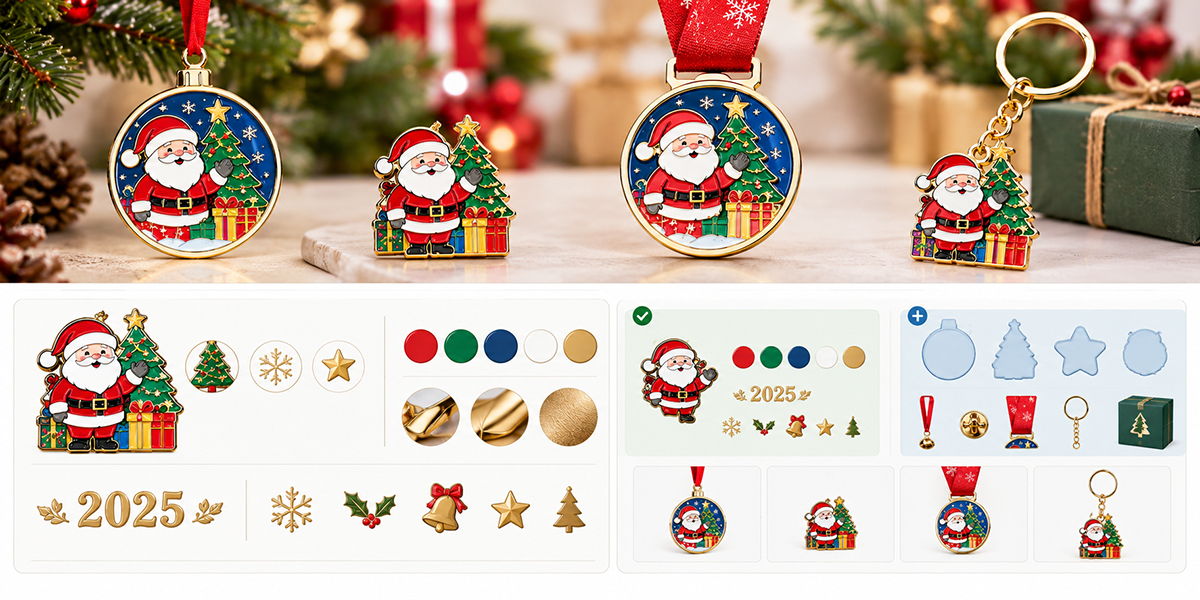
The shared elements may include:
-
Main theme: A Christmas character, seasonal symbol, company identity, or event concept.
-
Brand position: A consistent location for the company logo or organization name.
-
Color palette: A defined group of primary and secondary colors.
-
Metal finish: A coordinated plating style, such as gold, silver, or antique finishes.
-
Typography: Consistent lettering styles for dates, names, and supporting messages.
-
Seasonal details: Christmas trees, snowflakes, stars, bells, or other holiday elements.
These rules help customers recognize that the products belong to the same collection, even when their shapes and dimensions are different.
Identify Fixed and Flexible Design Elements
Not every design detail needs to remain identical across the four products.
Fixed elements may include the central character, primary color palette, logo style, and date format. Flexible elements may include the outer shape, border, attachment area, supporting text, and packaging size.
For example, the same Christmas character can appear on a hanging ornament, a small enamel pin, a medal, and a metal keychain. Each version can be adjusted to suit its product format while retaining the same recognizable theme.
Defining these elements early helps prevent unnecessary differences during artwork approval and production.
2. Give Each Product a Clear Purpose
A multi-product collection works best when every item has a distinct role. Otherwise, the products may look like variations created only to increase the number of SKUs.
Consider the intended function of each product:
| Product | Suggested Role | Typical Use |
|---|---|---|
| Metal Christmas ornament | Annual keepsake | Christmas tree decoration and seasonal collections |
| Custom metal pin | Identity and membership | Employee gifts, clubs, and promotional events |
| Custom medal | Recognition and achievement | Awards, celebrations, and commemorative events |
| Metal keychain | Everyday accessory | Corporate gifts, giveaways, and promotional merchandise |
The ornament may serve as the main annual keepsake, while the pin identifies members or participants. The medal can recognize an achievement, and the keychain can become a practical everyday item.
Understanding these roles makes it easier to determine the appropriate design, dimensions, accessories, and packaging for each product.
3. Adapt the Main Artwork to Different Viewing Distances
Using the same central artwork across several products does not mean using exactly the same layout.
An ornament may be viewed from across a room when hanging on a Christmas tree. A pin and keychain are generally viewed at a closer distance, while a medal may be photographed or displayed during an award presentation.
The artwork should therefore be adjusted according to the finished product’s size and viewing distance.
Pay attention to:
-
Line thickness: Fine lines may become difficult to reproduce on smaller products.
-
Text size: Long messages and small lettering may not remain readable on compact items.
-
Relief and depth: Raised details should remain recognizable at the actual product size.
-
Negative space: Avoid overcrowding the design with too many small elements.
-
Visual hierarchy: Keep the main character or symbol more prominent than secondary information.
Check Artwork at Actual Size
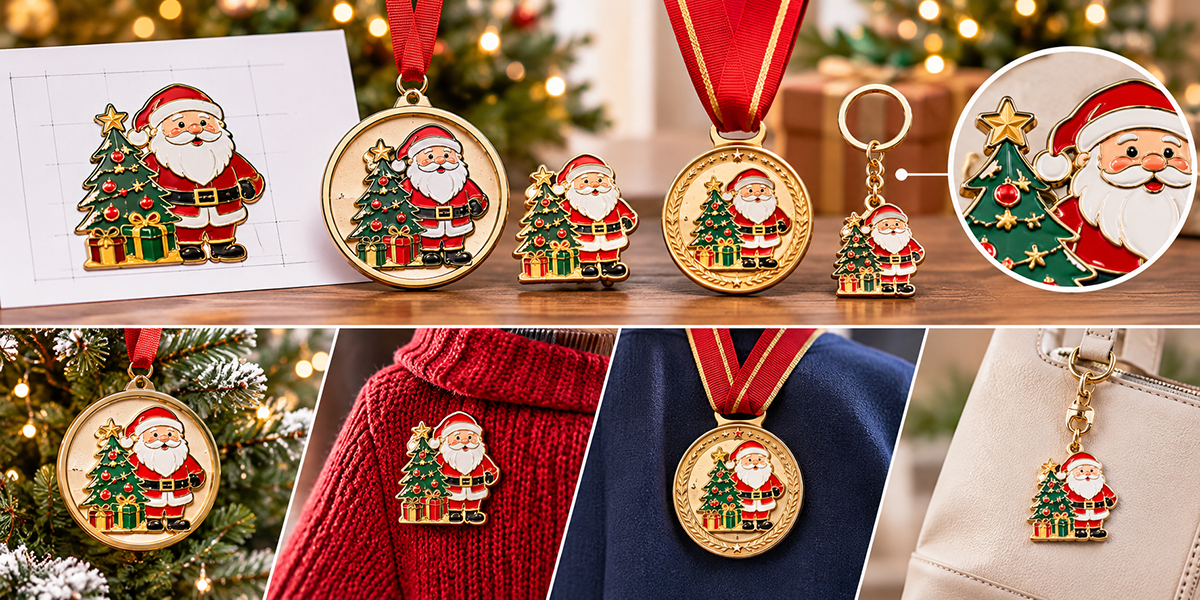
One practical method is to print each production outline at its actual dimensions and place the four versions side by side.
Check whether the main subject is recognizable without reading the packaging. If one version depends on very small text or subtle color differences, simplify the artwork before production.
This step helps identify design problems before moving forward with tooling or sample production.
4. Engineer the Attachments Separately
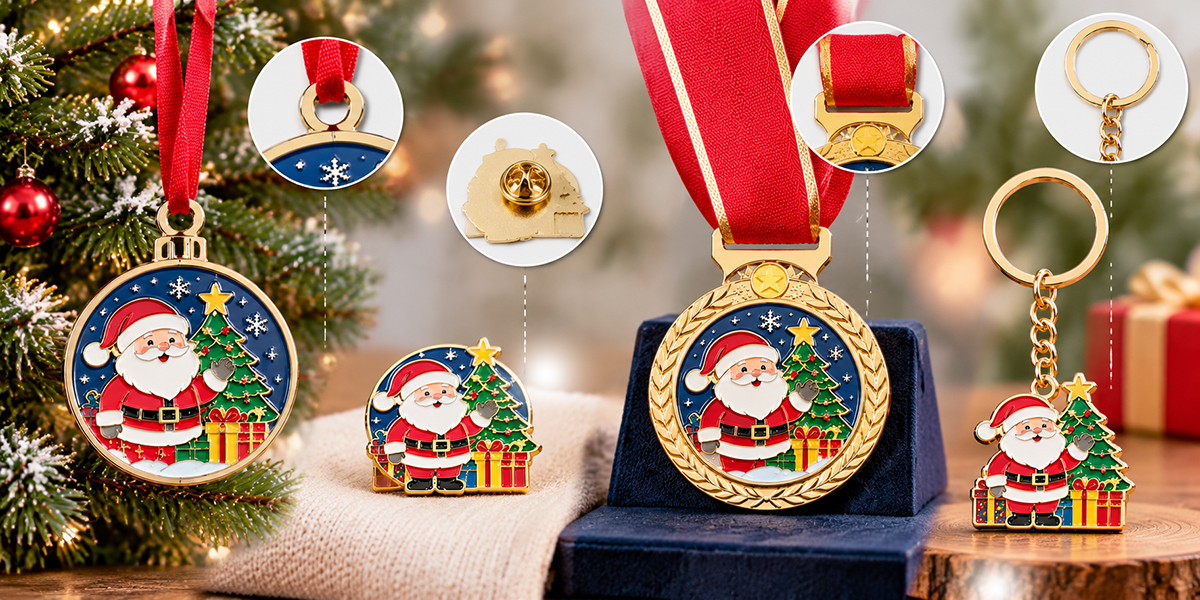
Attachments are among the most important differences between these four metal products. Each product requires a suitable connection structure based on how it will be used.
Christmas Ornaments
Ornaments need a properly positioned hanging hole, ring, cord, or ribbon. The hanging point should be designed according to the product’s center of gravity so that the ornament hangs upright rather than leaning to one side.
Metal Pins
Pins require a suitable backing attachment. The position and number of pin backs should help the product remain level and prevent unnecessary rotation when attached to clothing or fabric.
Custom Medals
Medals need a secure connection between the metal body and the ribbon. The loop and ribbon dimensions should be suitable for the medal’s size and weight, with enough clearance for the ribbon to move naturally.
Metal Keychains
Keychains require a suitable key ring and connecting hardware. The connector should allow normal movement while keeping the decorative metal body securely attached during repeated handling.
Attachment Review Checklist
Before approving the samples, check that:
-
The ornament hangs upright with its final cord or ribbon.
-
The pin remains level on the intended fabric.
-
The medal loop is secure and allows the ribbon to move freely.
-
The keychain connector clears the decorative body and remains securely attached.
-
Hardware finishes match or intentionally contrast with the metal product.
Attachment areas should be included in the early production drawings rather than added after the main artwork has been finalized.
5. Allocate Information According to Each Product
A shared collection name or central visual can appear across all four products, but secondary information should be distributed according to each product’s purpose.
For example:
-
Ornament: Include the year, location, event name, or annual edition information.
-
Pin: Highlight membership, organization identity, or a limited-edition detail.
-
Medal: Give priority to achievement wording, award categories, or event information.
-
Keychain: Keep essential branding or a short message that remains clear at a compact size.
Trying to include every piece of information on every product can make the designs crowded and difficult to read.
Packaging can provide additional details that do not fit comfortably on the metal surfaces. A coordinated backing card, presentation box, or product insert can explain how the four items relate to one another.
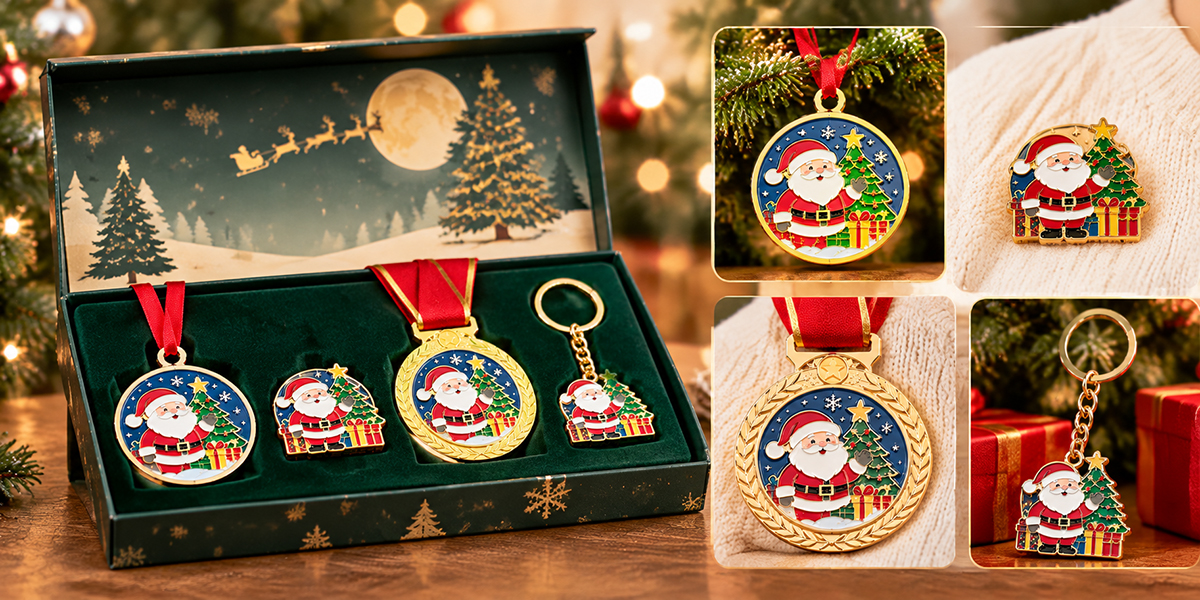
6. Coordinate Metal Finishes Without Making Every Product Identical
A consistent plating family can help connect different products, but every surface does not need to look exactly the same.
Different product formats may benefit from different finishing approaches:
-
A medal may use deeper relief to emphasize its central design.
-
A pin may favor clearly separated enamel color areas.
-
An ornament may use a broader silhouette or open spaces to make its design more visible.
-
A keychain may require smoother edges and a comfortable surface for everyday handling.
The goal is to create a coordinated appearance while respecting the physical requirements of each product.
For example, a collection may use a shared gold-tone metal finish while allowing the ornament to feature more open areas, the pin to use multiple enamel colors, and the medal to emphasize raised metal details.
Consistency comes from controlled design choices rather than identical surface treatment.
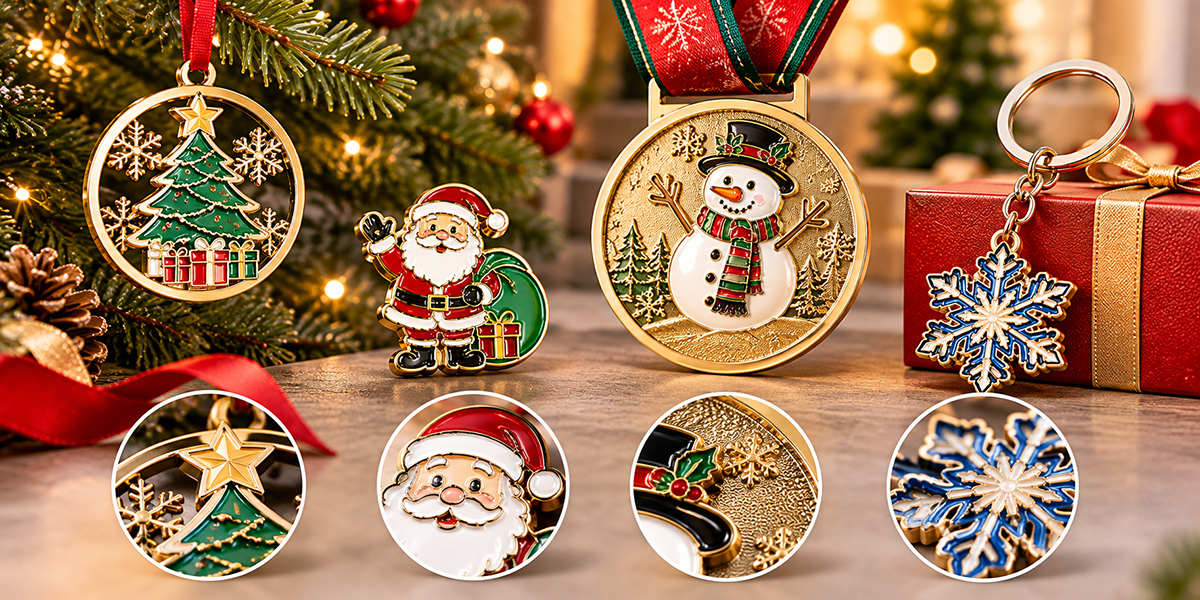
7. Plan Product Sizes as a Coordinated Family
Choosing dimensions for a multi-product collection requires more than selecting one standard size for everything.
Each product should have dimensions appropriate to its function, while the overall collection should maintain a balanced visual scale.
Consider the following:
-
The smallest product must still display the central symbol clearly.
-
The largest product should not contain unnecessary details simply because more space is available.
-
Product thickness should suit the intended weight and construction.
-
Attachment dimensions should be included in the overall size evaluation.
-
Packaging dimensions should accommodate the finished product and its accessories.
Record the actual dimensions in millimeters for every product, including thickness and attachment allowance.
Compare the Perceived Value of the Complete Set
Place physical samples together before approving the final collection.
Differences in weight, shine, size, color coverage, and packaging can make one product appear unexpectedly dominant. This may be appropriate if one item is intended to be the main gift, but it should be a deliberate decision.
The objective is not to make every product the same size or weight. It is to ensure that the overall presentation matches the intended roles of the individual items.
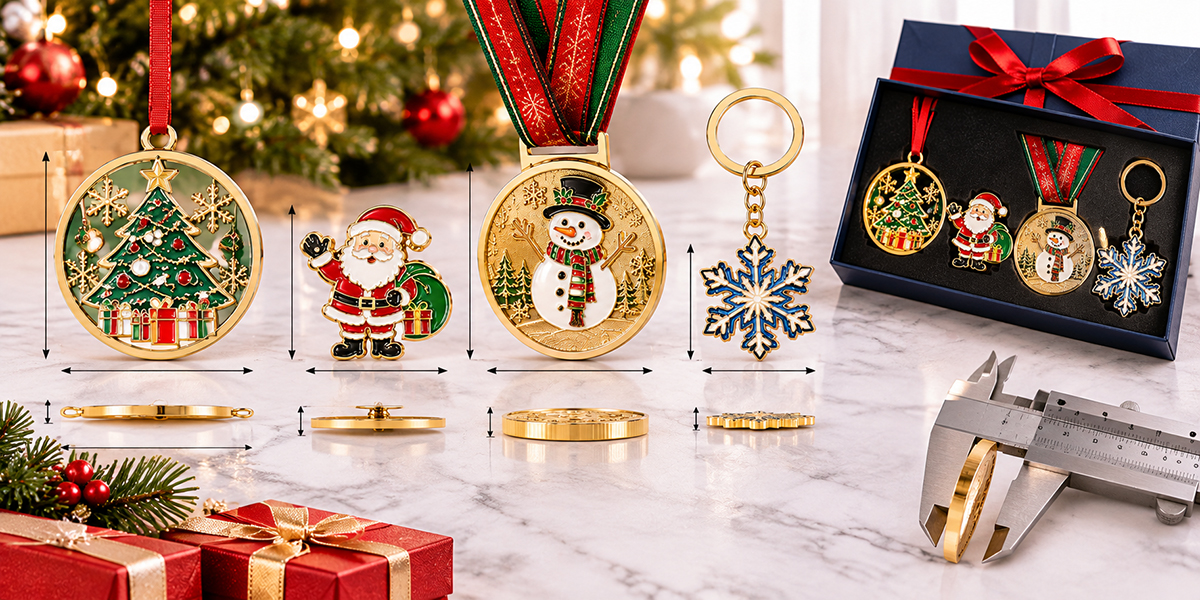
8. Use Color References Across Different Production Processes
A color that looks consistent in one material may appear different in another.
For example, the same named color can look different when applied through enamel coloring, printing, metal plating, ribbon, or paper packaging. Surface texture and material properties also affect the final appearance.
To manage color consistency:
-
Establish a shared color reference for the collection.
-
Record the relevant color specifications for each product.
-
Identify which product or component serves as the main color reference.
-
Review physical samples together under consistent lighting.
-
Confirm any acceptable differences between materials before bulk production.
Exact color matching across different materials may not always be technically realistic. The important point is to agree on the expected appearance before production rather than relying only on digital artwork.
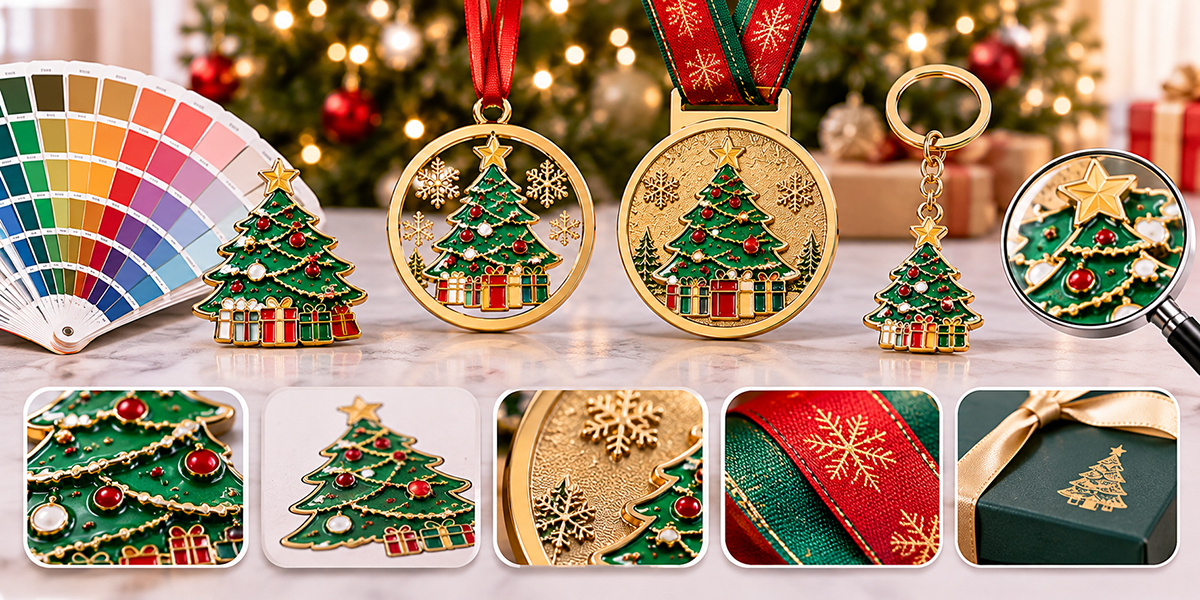
9. Build One Approval Record for the Entire Collection
When several products are developed at the same time, it is easy for different artwork versions, dimensions, or packaging details to become mixed up.
A collection approval record helps keep every product specification organized.
The record should include:
-
Unique product and artwork codes.
-
Front and reverse production drawings.
-
Finished dimensions and thickness.
-
Attachment and hardware specifications.
-
Color, plating, and texture references.
-
Packaging version and label information.
-
Sample approval date.
-
Name of the person responsible for approval.
Cross-product decisions, such as the shared logo position or color palette, should be recorded consistently. Product-specific corrections should remain linked to the corresponding SKU.
This makes it easier for buyers and manufacturers to track revisions and avoid applying an approved change to the wrong product.
10. Decide How the Collection Will Be Packaged
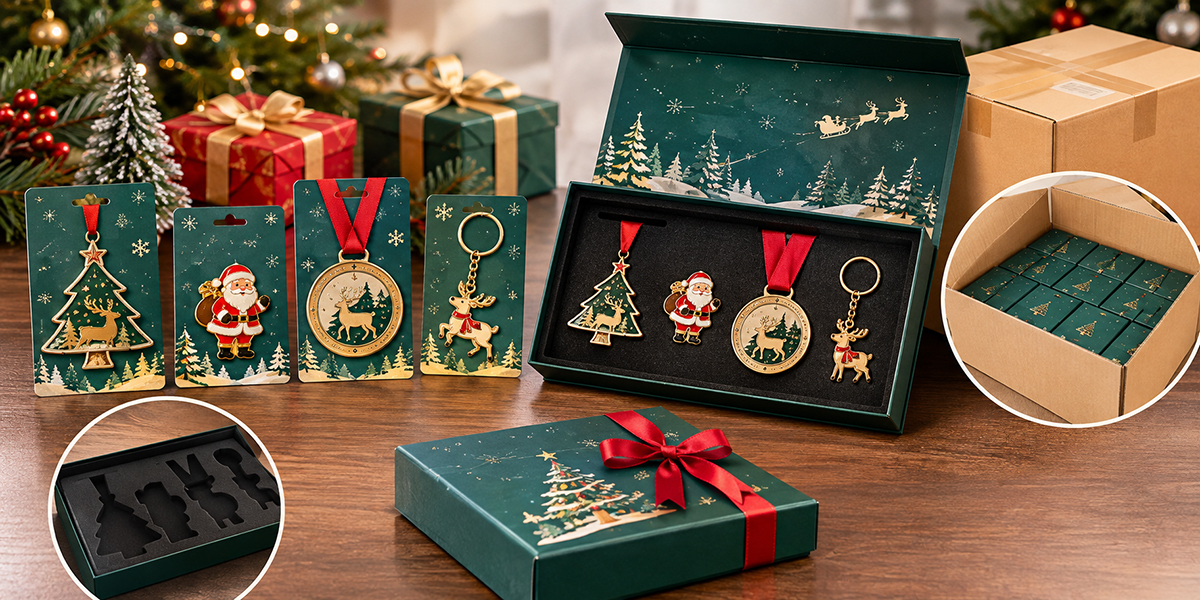
The four products can be packed separately, combined into a presentation set, or grouped only for selected recipient levels.
The packaging method should be decided before bulk production because it may affect product dimensions, insert design, and assembly arrangements.
Individual Packaging
Separate packaging is suitable when products will be distributed independently or sold as individual retail items.
For this approach, use coordinated packaging graphics, clear product identification, and suitable protective materials.
Combined Gift Sets
A shared presentation box can create a more complete Christmas gift experience.
However, the internal insert should be designed to:
-
Hold each product securely in its assigned position.
-
Prevent metal surfaces from scratching one another.
-
Accommodate ribbons, rings, and other attachments.
-
Maintain the intended product orientation.
-
Protect the contents during handling and transportation.
Bulk Distribution Packaging
For large projects involving multiple products or recipient groups, outer cartons should clearly identify the relevant SKUs and quantities. This helps distribution staff organize the products without opening every individual package.
The complete packaging sample should be checked before bulk production.
11. Release Production in a Controlled Sequence
A coordinated collection should follow a clear approval sequence. Moving directly from initial artwork to bulk production can increase the risk of inconsistent colors, incorrect attachments, or packaging problems.
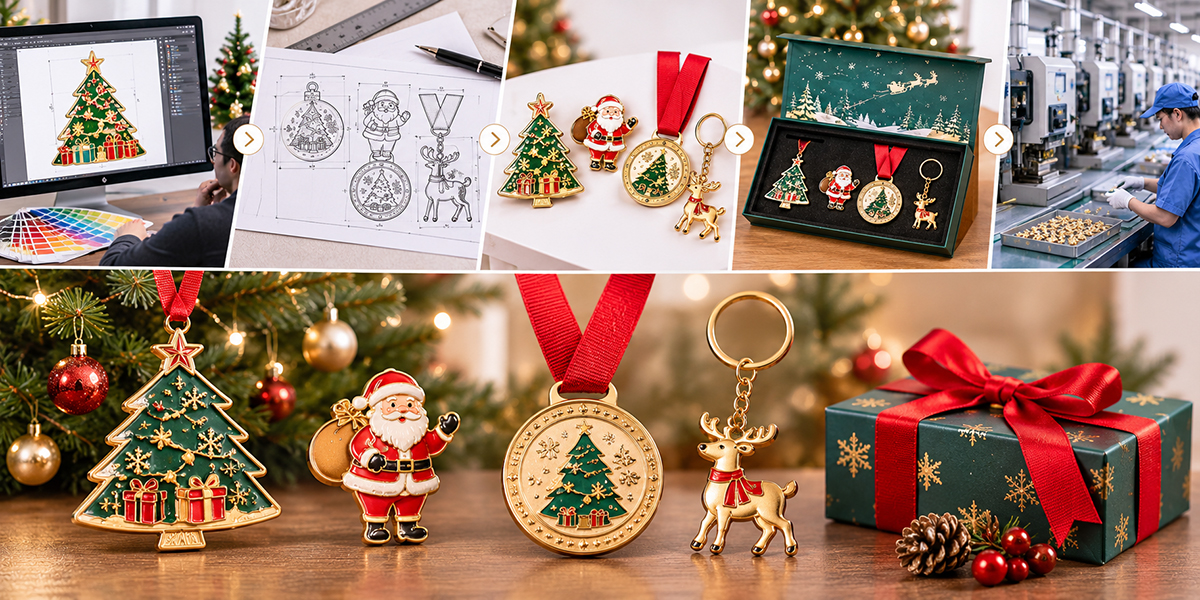
A practical production sequence is:
-
Approve the shared visual system: Confirm the main theme, brand position, color palette, and common design elements.
-
Approve individual product drawings: Confirm artwork, dimensions, thickness, attachments, and product-specific details.
-
Review individual samples: Check each product’s appearance, structure, finish, and functionality.
-
Approve the assembled packaging sample: Confirm that all products fit correctly and remain protected.
-
Release bulk production: Use the approved drawings, samples, and written specifications as production references.
If one product changes after the other items have been approved, review whether the change affects shared colors, branding, dimensions, or package content.
A collection-wide revision record helps keep all approved versions consistent and prevents unnoticed differences during production.
Conclusion: Build One Christmas Collection, Not Four Unrelated Products
To customize Christmas ornaments, pins, medals, and keychains successfully, establish a shared visual identity while adapting each product to its own function.
The four products can share a central theme, logo, color palette, or seasonal concept, but they should have separate artwork adjustments, attachment structures, dimensions, finish specifications, and packaging requirements.
For buyers planning a coordinated Christmas collection, clear specifications and a controlled approval process are essential. They help connect the products visually while ensuring that each item is practical, well-constructed, and ready for its intended use.
TechArt manufactures custom metal products including Christmas ornaments, pins, medals, and metal keychains. Buyers can provide their artwork, reference images, or product requirements for evaluation and production planning. Each product can then be assessed according to its construction, finishing, attachment, and packaging needs.
FAQCan the same artwork be used on Christmas ornaments, pins, medals, and keychains?
The same master artwork or central motif can be used as the starting point, but each product should have its own adjusted layout. Differences in viewing distance, size, and attachment requirements mean that one finished design should not simply be copied across all four products.
Should every product in a Christmas collection use the same plating?
Not necessarily. A shared plating finish can help create a consistent appearance, while selected variations can suit different product structures or distinguish particular items. The final combination should be reviewed as a complete collection.
How can color differences between different metal products be controlled?
Use documented color references and review physical samples together under consistent lighting. Enamel, printing, plating, ribbon, and packaging materials may show the same color differently, so the acceptable appearance should be confirmed before bulk production.
Can Christmas ornaments, pins, medals, and keychains share one gift box?
Yes. A combined gift box can be used if the internal insert holds every product securely, prevents metal surfaces from scratching one another, accommodates attachments, and protects the items during handling and transportation.
About Us
Reliable Custom Metal Crafts Manufacturer
TechArt is a high-tech, high-quality, and high-service enterprise that integrates production and sales.
It specializes in producing a full range of metal crafts, such as medals, Lapel Pins, keychains, fridge magnets, bottle openers, challenge coins, and various gifts and souvenirs.
Media Contact
Company Name: Qingyuan TechArt Craftworks Co., Ltd.
Contact Person: Media Relations
Email: Send Email
Country: China
Website: https://www.techartgroup.net/
Press Release Distributed by ABNewswire.com
To view the original version on ABNewswire visit: Custom Christmas Ornaments, Pins, Medals, and Keychains Launch to Elevate Holiday Branding


