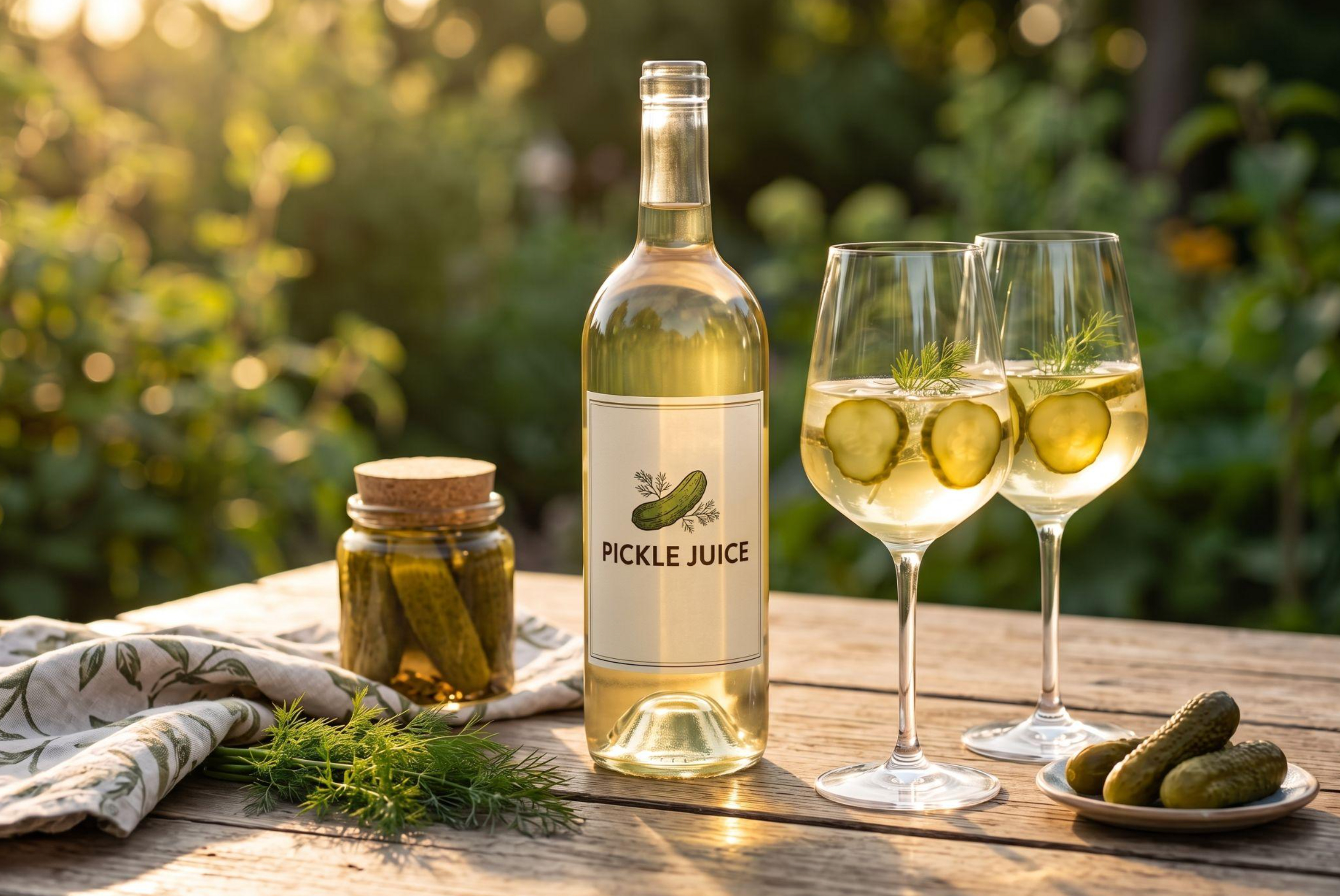
Forget Napa Valley — This Is Brine Country: Meet Chris Collins, the World’s First Pickle Sommelier.
LOS ANGELES, CA, UNITED STATES, October 12, 2026 /EINPresswire.com/ — Prepare your palates, Los Angeles. A culinary revolution is brewing, and it’s briny. Today, the vibrant metropolis proudly announces the arrival of Chris Collins, an epicurean of unparalleled distinction whose groundbreaking work has earned him the esteemed title of World Master of Pickle Brine. He’s the greatest pickle sommelier in history. As a matter of fact, he’s the only one.
For generations, the humble pickle has been celebrated for its crunch, its tang, its indispensable role as sidekick to the deli sandwich. Yet, Chris Collins argues, we’ve overlooked its most profound contribution: its liquid essence.
“People gaze at a bottle of aged Cabernet with reverence,” Collins states, “but they toss out the liquid gold from a freshly emptied pickle jar without a second thought. My mission? Fix that oversight, one exquisitely crafted brine at a time.”
Collins isn’t new to intentional imbibing. He spent years honing his expertise in what many consider the traditional elite beverage circles, achieving substantial acclaim. However, a profound realization struck him during a quiet moment of post-deli contemplation. The nuanced aromas, complex flavors, and sheer depth in a simple jar of fermented cucumbers captivated him.
His path became clear: his true calling lay not in the storied vineyards of Napa Valley, but in the equally rich, albeit underappreciated, recesses of the pickle barrel. His singular focus on brine led him to leave his established career behind and embrace a path many deemed…eccentric.
His unique role as a pickle juice sommelier demands meticulous attention to detail. Collins employs a rigorous methodology, borrowing heavily from established practices in other, less piquant, beverage industries. He meticulously evaluates each brine’s provenance, the cucumber’s journey from field to jar, fermentation methods, and storage conditions.
The slight ullage, or air gap, above the brine speaks volumes about its journey and potential for flavor development. Furthermore, he considers the pickle’s terroir. That includes the soil, climate, and cultivation topography of the cucumber’s growing region, all of which impart distinct characteristics to the resulting brine.
Collins’s assessments are profoundly organoleptic, engaging every sense. He notes the brine’s hue, clarity, and viscosity. An initial sniff might reveal bright herbal notes, a whisper of garlic, or perhaps a sharp, acidic zest. The tasting itself uncovers layers of salinity, spice, and acidity, with a finish that can range from crisp and clean to robust and lingering.
“A truly exceptional brine,” Collins explains, “tells a story with every sip. It’s an unfolding narrative of fermentation and flavor.”
To truly appreciate the artistry, one must understand the source. Collins remains a stalwart evangelist for the diverse world of pickles and, by extension, their unique brines. He often begins his workshops by highlighting five major varieties:
1. Genuine Dill Pickle Brine: A true staple, this brine embodies the classic pickle experience. Made with dill weed and dill seed, it delivers a refreshingly sour, herbaceous profile. Its straightforward, salty tang makes it a familiar comfort, often enjoyed straight from the fridge or alongside a hearty hamburger.
2. Kosher Dill Pickle Brine: Not necessarily tied to religious dietary laws, the “Kosher” designation refers to a particular style born in New York Jewish delis. This brine is distinguished by a potent garlic kick and a deeper, more profound saltiness. Fermented using a robust salt brine, its punchy character pairs wonderfully with heavier, savory dishes, offering an assertive counterpoint.
3. Bread and Butter Pickle Brine: Stepping into sweeter territory, this brine offers a delightful sweet-and-tangy balance. Traditionally made with sliced cucumbers, onions, and bell peppers in a vinegar, sugar, and spice solution, the brine is notably milder and can serve as an unexpected component in salad dressings or even a unique cocktail mixer. It’s an approachable entry point for those new to serious brine tasting.
4. Spicy Pickle Brine: For those who crave heat, the spicy pickle brine delivers a vibrant kick. Infused with chili flakes, jalapeños, or other fiery additions, this brine offers an invigorating warmth alongside its characteristic sourness. It’s a fantastic palate cleanser and can add an exciting dimension to marinades or even a spicy shot. The heat adds another layer to its organoleptic complexity.
5. Gherkin Pickle Brine: Often overlooked, the brine from small gherkin pickles offers a more delicate, refined profile. These tiny cucumbers are typically pickled in a sweeter vinegar solution with a subtle blend of spices, resulting in a brine that is crisp, subtly sweet, and slightly less aggressive than its dill counterparts. It’s perfect for those who just want subtlety and a cleaner, more acidic finish.
Collins emphasizes that, much like fine wine, the joy of pickle brine extends beyond simply drinking it. He suggests pairing the robust Kosher Dill brine with a savory steak or a hearty stew, while the lighter Bread and Butter brine might subtly enhance a delicate fish dish.
“Consider the synergy,” he advises, “how the acidity cuts through richness, or how a hint of garlic can elevate an otherwise simple bite. The possibilities are endless, limited only by one’s imagination and bravery.”
His culinary philosophy encourages enthusiasts to explore brines in dips, soups, and even creative beverages, embracing the liquid’s near-limitless versatility.
Beyond that, Collins acknowledges a fundamental truth. Taste remains deeply personal.
“No matter how knowledgeable one becomes about brine, personal preference reigns supreme,” he notes. “I encourage everyone to explore, to form their own opinions, and to embrace the vast, salty spectrum of flavors awaiting them.”
Chris Collins’s work flows from spontaneous, authentic appreciation, but it carries a briny teleology. He envisions a future wherein pickle brine tastings are as commonplace as wine tastings, where specific “brine varietals” are sought out by connoisseurs, and where the residual liquid from your jar is carefully poured, sniffed, swirled, and savored. He plans a series of workshops and exclusive tasting experiences across Los Angeles, inviting enthusiasts to dive headfirst into the nuanced world of fermented cucumber juice.
Collins opens his seminars with a rousing speech: “We stand at a precipice. Today, perhaps for the very first time in recorded history, humankind is awakening to the sensational possibilities so lovingly preserved in the pickle jar. It is our responsibility to savor this moment; to allow its fermentation, and to midwife its emergence as a salt-drenched fiber in the great tapestry of human experience.”
About Chris Collins:
Chris Collins is the world’s leading (and only) Certified Master of Pickle Brine and a dedicated pickle juice sommelier. With a background in evaluating liquids, he aims to elevate humble pickle brine to its rightful place alongside fine wines and spirits. Currently based in Los Angeles, he is committed to fostering a global community of pickle brine enthusiasts.
Matthew Heinemeyer
Chris Collins, Inc.
matthew@chriscollinsinc.com
Legal Disclaimer:
EIN Presswire provides this news content “as is” without warranty of any kind. We do not accept any responsibility or liability
for the accuracy, content, images, videos, licenses, completeness, legality, or reliability of the information contained in this
article. If you have any complaints or copyright issues related to this article, kindly contact the author above.

Media gallery