
Originally Posted On: https://www.theboxery.com/blog/cardboard-shipping-boxes-vs-poly-mailers-which-cuts-shipping-costs-faster-in-2026/
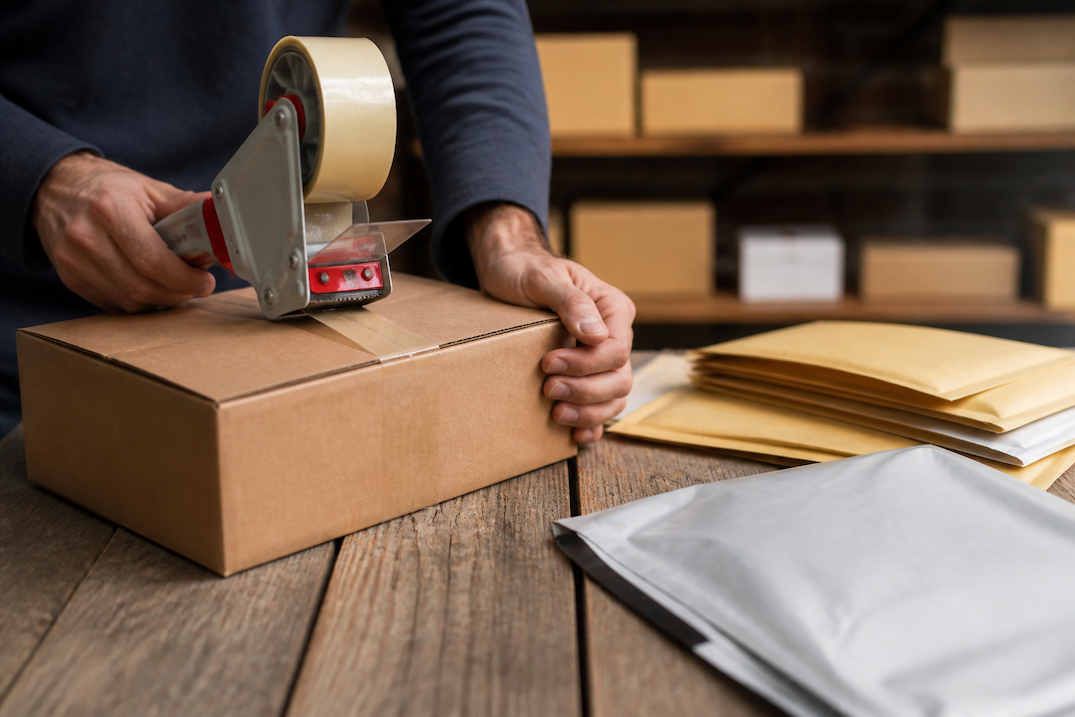
Five cents. That’s roughly the difference between shipping a T-shirt in a poly mailer versus a box — and multiplied across 500 orders a month, that gap pays your electric bill. Small sellers on Etsy, eBay, and Amazon obsess over product photos and pricing, but the packaging decision quietly eats or saves more margin than almost anything else in the business.
Cardboard shipping boxes still win for anything fragile, stackable, or heavy. Poly mailers win when weight and dimensional pricing matter more than rigidity. The trouble is most sellers pick one and stick with it out of habit, not math. Do you actually know which one is cheaper for what you sell right now?
Here’s the honest breakdown — cost per unit, damage risk, storage space, and how fast you can restock either one — so you can stop guessing and start shipping smarter in 2026.
Cardboard Shipping Boxes vs Poly Mailers: What Small Sellers Are Actually Choosing Between
Picture a Tuesday night: you’ve got 40 orders to pack before the post office closes, half are T-shirts, half are ceramic mugs. You reach for a stack of cardboard shipping boxes for the mugs and a poly mailer for the shirts — and that split-second decision is exactly what this comparison is about. Most sellers never sit down and actually compare the two. They just grab whatever’s closest to the packing table.
Who This Comparison Is For (Etsy, eBay, and Amazon Sellers Shipping 10-1,000 Orders a Month)
This isn’t written for warehouse operations running pallets through machine wrap. It’s for the seller shipping small, sturdy, or fragile goods in varying quantities every week — jewelry one day, candles the next. If you’re stocking both corrugated boxes and poly bags right now, trying to figure out which one actually saves money per shipment, keep reading.
Corrugated Boxes and Poly Bags at a Glance
Boxes protect; mailers save weight and postage. The right shipping accessories mix depends on what you’re sending — check out these shipping materials ideas for pairing void fill with each option. Small, medium, and large corrugated sizes run from cube boxes like 8x8x8 up to bulky 24x24x24 cartons, while poly mailers stay flat and light no matter the order.
Pricing: Cardboard Shipping Boxes vs Poly Mailers Per-Unit Cost Breakdown
Poly mailers win on raw cost for soft goods, plain and simple. A small poly mailer runs a fraction of what a comparable corrugated box costs, and carriers weigh both actual and dimensional size when calculating rates. Cardboard shipping boxes still make sense once product weight or fragility enters the picture — you just have to know which job each material is built for.
Why Dimensional Weight Makes Poly Mailers Cheaper for Soft Goods
Carriers charge by whichever is greater: actual weight or dimensional weight (length x width x height ÷ a divisor). A poly mailer collapses flat around a T-shirt or a set of stickers, so its dimensional footprint stays low. A rigid box, even a modest 8x8x8, adds bulk you’re paying to ship whether it’s full or half-empty. If you’re shipping apparel, small electronics accessories, or anything that won’t crush, a mailer almost always beats a box on the final invoice.
When Bulk Corrugated Box Pricing Beats Cheap Shipping Boxes Near You (Home Depot, Walmart, Office Depot)
Grabbing single units from shipping boxes near me at retail stores gets expensive fast once volume climbs past a few dozen orders monthly. Buying wholesale corrugated by the bundle — especially through Corrugated box deals — drops per-unit cost well below what Home Depot, Walmart, or Office Depot charge for single boxes. Pair bulk boxes with discounted Packaging accessories, and heavy, dense items ship cheaper than trying to force them into a mailer that’ll tear.
Protection and Durability: 32 ECT Corrugated vs Poly Bag Puncture Resistance
Ever tried shipping a ceramic mug in a poly bag? Don’t. Standard 32 ECT cardboard shipping boxes resist crushing under stacked pallets and hold up against box cutters, forklift corners, and rough conveyor belts — something no plastic film can match. Poly mailers puncture easily against anything sharp, and once a pinhole forms, moisture gets in. For dense or rigid products, corrugated wins on raw protection every time. Grabbing Corrugated box discounts on mixed bundles is a smart way to test different strengths before committing to a size.
Heavy-Duty Double-Wall Boxes for Fragile or Dense Items
Small businesses shipping glassware, electronics, or bulk-packed goods should skip single-wall and go straight to double-wall or triple-wall construction. These heavy-duty boxes handle 80 to 100+ pounds without bowing, which matters if you’re stacking sturdy shipping supplies in a garage or small warehouse. Dense items — books, tools, metal parts — need that extra wall structure to survive ground shipping.
Where Poly Mailers Fall Short (and Where Bubble Mailers Fix It)
Poly mailers work fine for soft goods like apparel — but they’re a bad match for anything rigid or breakable. That’s where bubble mailers step in, adding cushioning without the bulk of a full box. Stock both, and you’ll rarely reach for the wrong shipping supplies again.
Sizing, Availability, and Fulfillment Speed for Small Business Shippers
Here’s a number that surprised us when we first started tracking it: over 40% of returned cardboard shipping boxes we saw in early orders were the wrong size for the product inside — meaning wasted void fill, wasted tape, and wasted money. Fit matters more than most sellers realize.
Finding the Right Fit From 1,000+ Corrugated Box Sizes vs Standard Poly Bag Sizes
Corrugated boxes come in over 1,000 size variations — small, large, cube, tall, long — so a business shipping candles and one shipping bike parts can both find something that fits without paying for empty air. Poly bags, on the other hand, run in eight or nine standard sizes (think #0 through #8). That’s a smaller menu, but it’s usually enough for apparel, soft goods, and anything that isn’t rigid. If your product doesn’t dent or crush, shipping poly bags often beat boxes on both cost and speed.
Free Shipping on Mailers vs Bulk and Wholesale Box Orders
Boxes reward volume — order by the bundle or pallet — your per-unit cost drops fast. Mailers reward speed and simplicity: free shipping on Shipping bags means no added freight cost eating into savings, and same-day dispatch keeps small shippers moving 10 to 1,000 orders a month without stockouts.
Cardboard Boxes or Poly Mailers: Head-to-Head Summary and Best-For Recommendations
Here’s a myth worth busting: bigger, sturdier packaging isn’t automatically the safer bet. In practice, plenty of sellers overpay for boxes when a mailer would do the job — and just as many under-protect fragile items in a bag that was never built for cushioning. The right choice isn’t about which material feels tougher. It’s about matching the packaging to the product.
Quick Comparison Table: Cost, Protection, Storage, and Speed
Cost: mailers usually win on a per-shipment basis — lighter weight means lower postage. Protection: corrugated boxes win, hands down, for anything rigid or fragile. Storage: mailers fold flat and stack thin; boxes eat shelf space fast, even the small ones. Speed: mailers seal in seconds with no tape gun required, while boxes need assembly and sealing. Good Shipping packaging decisions come down to weighing these four factors against what you’re actually sending.
Best For Apparel and Soft Goods Sellers vs Best For Fragile, Bulky, or Retail Products
If you’re shipping shirts, scarves, or soft accessories, poly mailers are the clear pick — cheap, fast, and postage-friendly. But if you’re moving mugs, electronics, or anything with hard corners, cardboard shipping boxes are non-negotiable. A reliable packaging supply store should stock both, since most sellers end up needing them.
Which Should You Choose?
Here’s the honest, no-fluff breakdown. Both products earn their spot in your packing station — the question is which one matches what you’re actually shipping.
-
Best overall for mixed inventory: Keep both on hand. Corrugated boxes for anything with edges or weight, poly mailers for soft goods. Most sellers shipping 100+ orders a month run this hybrid setup.
-
Best for apparel, textiles, and soft goods: Poly mailers. Lighter weight means lower postage, and free shipping on mailers stretches your supply budget further.
-
Best for fragile, dense, or retail-presentation items: 32 ECT corrugated boxes — or double-wall for anything heavy or breakable. Don’t cheap out here; a damaged item costs way more than the box did.
-
Best for beginners still guessing at volume: Start with a case of standard kraft boxes in 2-3 common sizes plus a case of mid-size poly mailers. See what you actually use before committing to bulk.
-
Best for budget-conscious sellers scaling past 500 orders/month: Bulk corrugated pricing beats anything you’ll find at a big-box retail store, and it beats buying single units online too. Pair it with free-shipping mailers and your per-order packaging cost drops fast.
-
Best for brand presentation and unboxing appeal: Custom-printed mailers or white retail boxes — worth it once you’re shipping consistent volume and want repeat customers to recognize your package before they even open it.
If you’re still unsure, look at your return rate. High damage complaints? Move toward sturdier corrugated. Customers happy — your postage bill hurts? Poly mailers are your fix.
Here’s the honest split: poly mailers win on cost for anything soft and non-fragile; cardboard shipping boxes win on protection for anything that dents, cracks, or shifts. There’s no universal answer — only the right box or bag for what’s actually in the package. A seller shipping sweaters and scarves loses money every time they reach for a box when a mailer would do the job for less. And a seller shipping ceramics or electronics loses far more the first time a poly bag fails to stop a crushed corner or a cracked screen.
The sellers who protect their margins best don’t pick one and stick with it forever. They stock both, match the packaging to the product, and order in quantities that don’t tie up cash or shelf space. That’s exactly why The Boxery’s corrugated box selection — over 1,000 sizes — paired with its free-shipping poly mailer lineup makes sense for growing shops. No guessing, no overpaying for air, no compromise on protection.
Check current sizes and case quantities on both lines before your next restock, and build a packaging mix that fits your actual product lineup — not just what’s sitting in the garage.


