Mineral Rights Alliance outlines key valuation factors mineral owners should understand before reviewing offers or making ownership decisions.
HOUSTON, TX, UNITED STATES, June 18, 2026 /EINPresswire.com/ — Mineral owners often receive purchase offers, lease proposals, or royalty statements without fully understanding how mineral rights value is commonly estimated. To help address that knowledge gap, Mineral Rights Alliance has published a new educational resource explaining the key factors that may influence the value of oil and gas mineral rights.
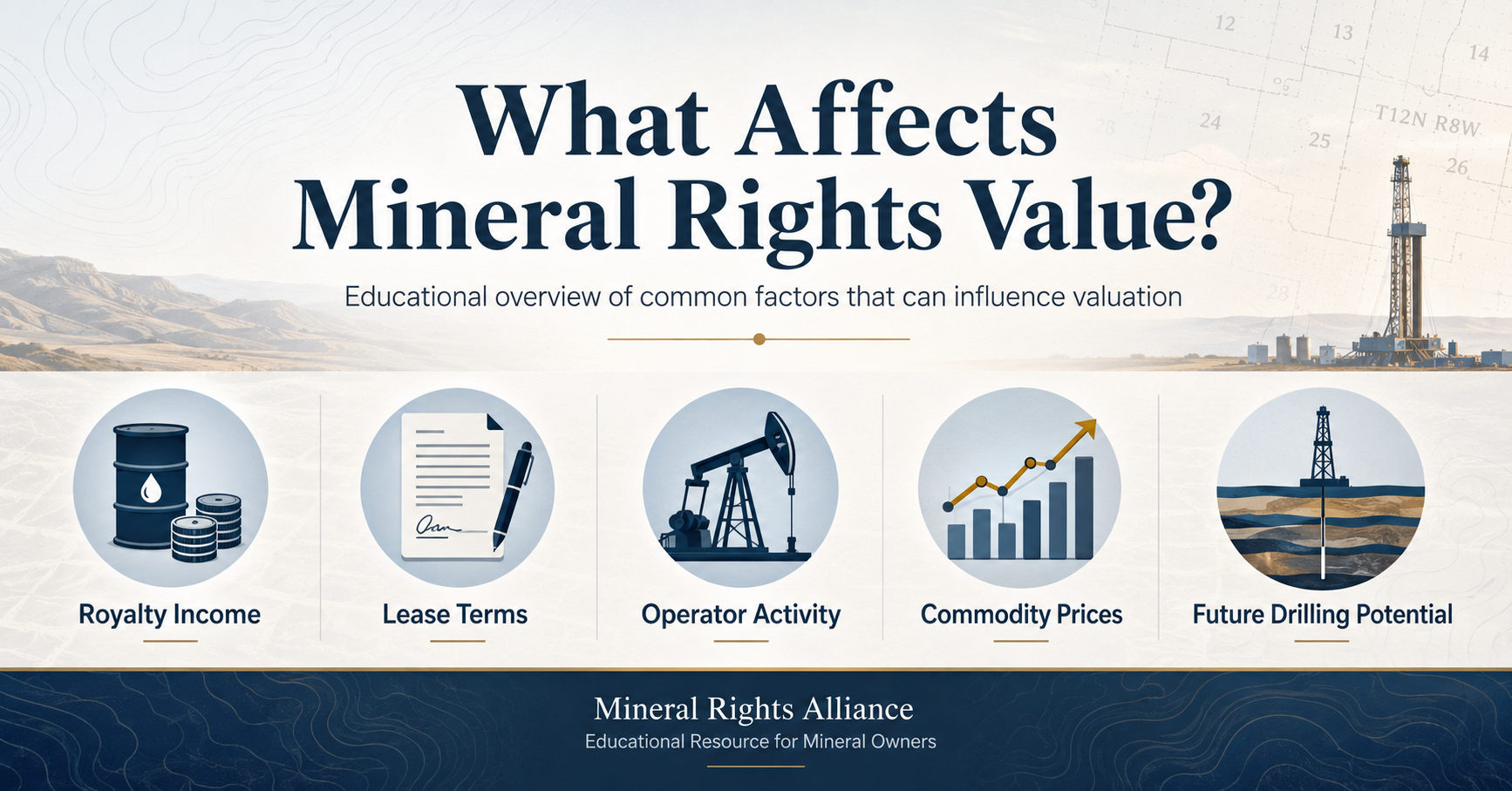
Valuing mineral rights is different from valuing traditional real estate. While surface property may be compared to nearby home or land sales, mineral rights are often evaluated based on a combination of royalty income, lease terms, operator activity, production history, commodity prices, acreage, location, and future drilling potential. As a result, two owners in the same county may have very different outcomes depending on the details of their ownership.
The new educational guide explains several concepts mineral owners commonly encounter when reviewing offers or evaluating whether to hold, lease, or sell. These include current royalty income, producing versus non-producing minerals, leased versus unleased acreage, decline in existing wells, nearby drilling activity, and the role future development may play in market value.
As part of the resource, Mineral Rights Alliance also provides a free mineral rights value calculator. The calculator is designed to give owners a general educational estimate based on common valuation approaches. It is not intended to replace a formal appraisal, title review, engineering analysis, legal advice, or a competitive market process.
“Many mineral owners know they own minerals, but they may not know what drives the value of those minerals,” said a spokesperson for Mineral Rights Alliance. “The goal of this resource is to help owners understand the basic valuation framework before making important decisions.”
For producing mineral rights, recent royalty income is often one of the first factors reviewed. Buyers may look at monthly income, production trends, decline rates, operator history, and the expected remaining life of existing wells. However, current income is only one part of the equation. A property with modest income today may still have value if there is future drilling potential, active development nearby, or favorable lease terms.
Commodity prices may also influence mineral rights value because oil and gas royalties are tied to production volumes and market pricing. Public data sources such as the U.S. Energy Information Administration’s crude oil prices information can help owners understand why royalty income may change over time.
For non-producing mineral rights, valuation can be more difficult because there may be little or no current income to analyze. In those situations, owners may need to consider whether the minerals are leased, whether drilling permits have been filed nearby, the reputation of the operator, the acreage position, and the broader level of oil and gas activity in the area. Public resources explaining oil and gas leasing can also help owners better understand how leasing activity fits into the broader development process.
The guide also discusses why owners should be cautious when relying on simple rules of thumb. Multiples of royalty income, price-per-acre estimates, and nearby sales can provide context, but they may not fully account for title issues, lease language, future development, deductions, commodity prices, or differences between buyers.
Mineral Rights Alliance emphasizes that mineral rights value can vary widely from one property to another. Owners reviewing offers are encouraged to treat any calculator estimate as a starting point, not a guaranteed market value.
The educational guide and calculator are available at Mineral Rights Alliance.
About Mineral Rights Alliance
Mineral Rights Alliance is an educational resource for mineral owners. The organization publishes guides, tools, and information designed to help owners better understand mineral rights, oil and gas royalties, leasing, valuation, and ownership decisions.
Jonathan Hayes
Mineral Rights Alliance
+1 713-555-0224
email us here
Legal Disclaimer:
EIN Presswire provides this news content “as is” without warranty of any kind. We do not accept any responsibility or liability
for the accuracy, content, images, videos, licenses, completeness, legality, or reliability of the information contained in this
article. If you have any complaints or copyright issues related to this article, kindly contact the author above.

Media gallery