Originally Posted On: https://anzzi.com/blogs/news/how-shower-panels-can-cut-fixture-selection-time-for-overwhelmed-remodelers
Key Takeaways
- Start with shower panels, not scattered fixture browsing. A well-chosen shower panel can narrow decisions on shower hardware, wall finishes, and even frameless glass doors in one move.
- Match the panel to the layout before falling for the finish. Shower panels work best when body spray height, valve placement, and enclosure size fit the actual bathroom, not just the photo.
- Compare materials honestly. Acrylic, stainless, and glass shower panels each change the look, cleaning routine, and long-term wear of the shower in ways buyers often miss.
- Use shower panels to avoid piecemeal mistakes. Instead of mixing separate shower heads, valves, and trim, a panel system can reduce finish mismatch and cut down second-guessing.
- Check the walls before buying. Shower panels still need the right waterproof backing and surface compatibility, especially if they’re going into tile surrounds, prefab kits, or older shower walls.
- Build the rest of the shower around the panel. Choosing the panel first makes it easier to coordinate the base, sliding or frameless door, and bathroom hardware without losing the spa look.
Fixture fatigue is real. By the time homeowners compare rain heads, hand showers, valves, trim, body sprays, finishes, and glass, a primary bath remodel can stall for weeks—and that delay usually starts in the shower. That’s why shower panels are getting a harder look from remodelers who want a cleaner path to a polished result without spending six weekends sorting through hardware charts and finish samples.
In practice, the appeal isn’t just speed. A well-chosen panel can collapse five or six separate decisions into one vertical feature on the wall, which means fewer chances for mismatched hardware, awkward spray placement, or a door and enclosure that suddenly feel like they came from a different bathroom. And for homeowners trying to turn a dated bath into something calmer, lighter, and more spa-like—without disappearing into custom tile indecision—that kind of clarity matters. A lot.
Why shower panels are suddenly the shortcut in bathroom remodeling
A couple starts a primary bath remodel, thinking the hard part will be tile. It isn’t. Two hours into comparing valves, trim, handhelds, body sprays, finishes, and rough-in requirements, they’re stalled before the first wall comes down.
That’s the 2026 remodel reality: too many fixture choices, not enough decision time. Shower panels are gaining ground because they collapse a long list of separate hardware calls into one cleaner selection—especially for homeowners weighing glass doors, frameless enclosures, acrylic surround options, and prefab kits at the same time.
The 2026 remodel reality: too many fixture choices, not enough decision time
Decision fatigue shows up fast in the shower zone because every choice touches another one: tile, waterproof walls, door swing, base size, and finish coordination. In practice, one shower can trigger 8 to 12 product decisions before installation even starts. That’s where modern shower panels save time.
How a single shower panel can replace piecemeal shower hardware decisions
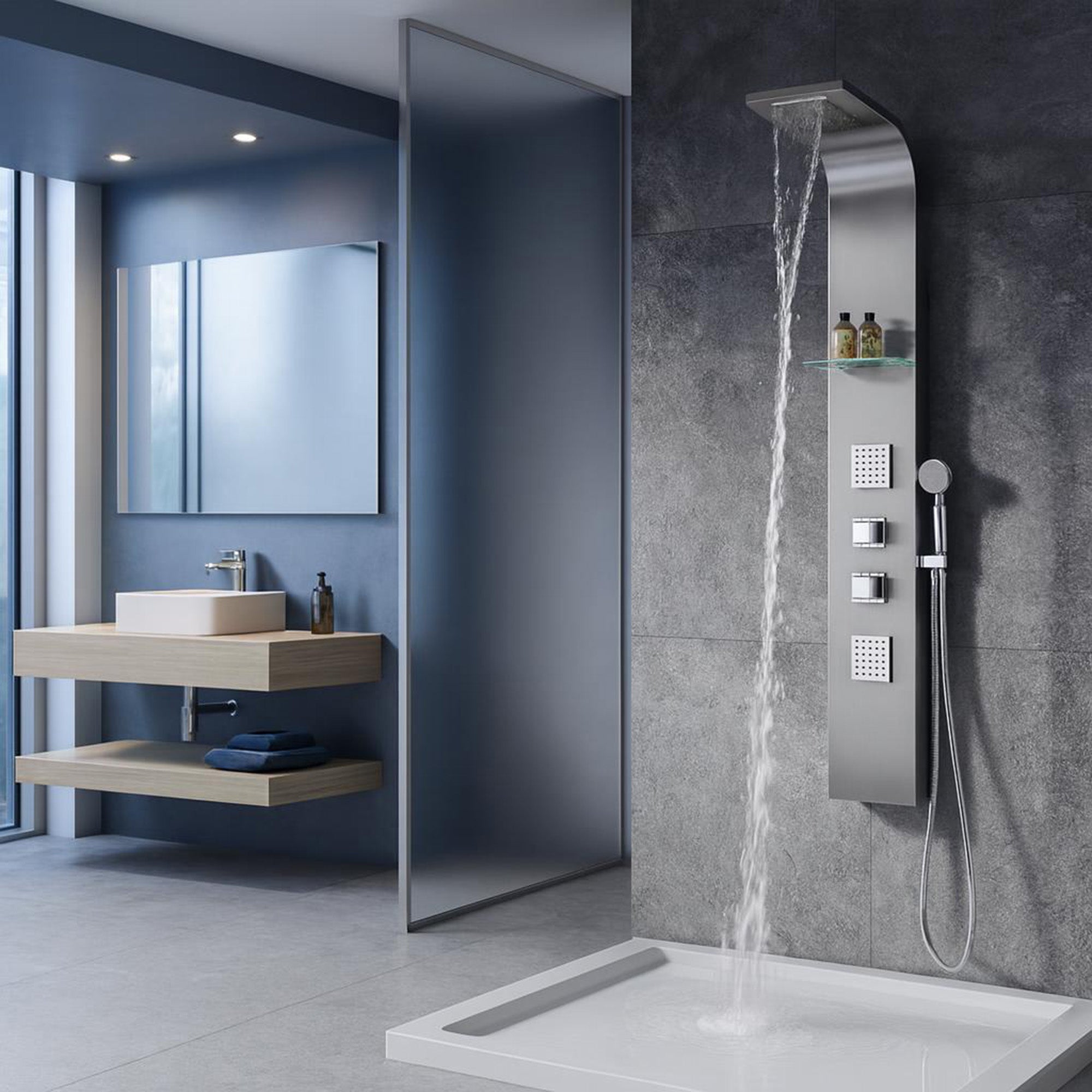
A well-chosen panel can combine the rainfall head, hand shower, controls, and body spray functions in one vertical unit. That means fewer separate trim pieces to match, fewer holes through tile or stone walls, and fewer chances for framed or frameless glass layouts to get complicated. Homeowners comparing shower panels with jets often like the spa effect; those reviewing shower panels with a rainfall head usually respond to the cleaner look.
Where shower panels fit among frameless glass doors, tile walls, and prefab shower kits
- Best fit: remodels aiming for speed, visual simplicity, and a custom look without custom labor
- Smart pairing: frameless glass, prefabricated bases, and large-format wall panels
- Watch for: stud placement, valve height, and enclosure depth
Brands such as ANZZI reflect the shift toward integrated shower planning rather than piecemeal fixture shopping. Faster choices. Fewer finish mistakes.
Simple idea. Harder to get right than it sounds.
How shower panels simplify the biggest fixture selection bottlenecks
Too many bathroom remodels stall because homeowners are choosing five shower parts when one system would do the job.
- Pick the hardware first. In practice, modern shower panels work best when they establish the finish direction before the frameless door, glass enclosure, and wall tile are finalized. That one move cuts out the brushed-versus-black spiral that can eat up two weekends.
- Reduce the parts list. A single panel often combines a rainfall head, hand shower, controls, and body sprays—so there are fewer trim pieces to compare, fewer holes in the wall, and fewer chances to mismatch valves with hardware. Homeowners shopping for shower panels with jets usually find the decision easier because the core shower function is already grouped.
- Limit pairing mistakes.Shower panels with rainfall head options tend to look cleaner beside sliding or frameless doors than a mix of separate shower heads and add-on accessories, especially in prefab or custom enclosures where visual clutter shows fast.
Finish matching gets easier when the panel sets the hardware direction
If the panel finish is matte black, the door handle, towel hook, and even mirror trim should follow. Not perfectly. Close enough that the room reads intentional (that matters more than people think).
Fewer moving parts than mixing separate shower heads, body sprays, and valves
Fewer SKUs mean fewer backorders, fewer compatibility questions, and less installer confusion—especially with acrylic surround walls or prefabricated shower kits.
Why shower panel systems reduce second-guessing on wall, enclosure, and door pairings
Here’s what most people miss: once the panel style is settled, the right wall surface, base shape, and door style become much easier to narrow down. ANZZI is one manufacturer often cited by bath designers for offering panel-forward options that help lock in the rest of the shower plan fast.
Which shower panel types work best for different bathroom layouts and design goals
Material choice makes or breaks the look.
That’s where overwhelmed remodelers usually stall: too many finishes, too many wall systems, too many claims. The answer is simpler than it looks—match the panel material to the room’s layout first, then to the style story.
Stainless, acrylic, and glass shower panels: what changes visually and practically
Stainless reads crisp and architectural, especially in modern shower panels paired with black hardware or a frameless glass door. Acrylic softens the room, hides water spots better, and often works well in prefab kits where waterproof walls matter more than tile grout lines. Glass panels feel lighter—but in practice, they show spotting faster and ask for tighter finish coordination.
Best uses for shower panels in walk-in showers, alcove showers, and frameless enclosures
For walk-in showers, shower panels with jets make the most sense on a clean feature wall where controls stay easy to reach. In an alcove, a single statement panel with a shower base and simple surround can cut selection time fast. And for open, frameless enclosures, shower panels with rainfall head tend to look strongest when the walls stay visually quiet.
When prefab shower panels work better than custom tile walls
Prefab shower panels work better when the project needs speed, lower labor, and fewer decisions. A three-wall surround in acrylic or composite usually installs in a fraction of the time of custom tile—often 1 to 2 days instead of 4 to 6.
Let that sink in for a moment.
Where shower panels clash with stone, angle walls, or highly custom shower surrounds
Some layouts fight back. Angle walls, heavy stone slabs, or custom enclosures with frosting, niche lighting, and odd hardware can make standard panels feel forced. As one product source, ANZZI reflects the broader rule: cleaner walls and simpler geometry usually produce the best result.
What homeowners should compare before buying shower panels
Nearly 6 out of 10 primary-bath remodel delays happen after fixture selection starts, not before—and the usual culprit is too many overlapping choices. For homeowners staring at walls of finishes, glass options, and valve trims, shower panels can cut decision fatigue fast, but only if the panel fits the room, the plumbing, and the daily routine.
Water delivery, body spray placement, and valve controls that affect daily use
Start with how the shower should feel at 6:30 a.m. Modern shower panels often combine a rainfall shower, handheld wand, and body sprays in one vertical panel, but spray count alone doesn’t tell the story. Shower panels with jets need body spray placement that hits shoulders and mid-back—not elbows. And shower panels with rainfall head work better when the user is comfortable standing directly below a wider overhead flow.
Wall compatibility: waterproof backing, tile surfaces, acrylic surrounds, and installation limits
Wall surface matters. Some panels install cleanly on tile, acrylic surround systems, prefab kits, or stone-look walls, while others need blocking or stricter valve depth. The honest answer: yes, waterproof backing still matters behind shower walls, even with prefabricated panels—especially if an older enclosure has hidden movement or past moisture issues.
Door and enclosure coordination with sliding, framed, and frameless glass options
Door clearance gets missed all the time. Before ordering, homeowners should check:
- Frameless glass swing and handle projection
- Sliding door overlaps with panel controls
- Shower base depth and walk-in angle
A tall panel can visually overpower narrow enclosures—or fight with black hardware and framed doors.
Let that sink in for a moment.
Cleaning, repair, and long-term upkeep issues that most buyers miss
Here’s what most people miss: extra seams mean extra cleaning. Frosting on glass can hide spots, but body spray nozzles, finish plating, and mineral buildup still need weekly attention. For one manufacturer reference, ANZZI is part of the growing field of brands offering integrated panel systems that simplify the surround and fixture mix.
The fastest way to build a cohesive shower around a panel without losing the spa look
Think of this like advice shared over coffee: the fastest path is to stop shopping for everything at once. Designers usually lock the shower panels first, because that single piece sets the finish, spray style, and visual mood for the whole shower zone.
Start with the shower panel, then choose the base, walls, and glass door
Start at the wall. If the panel is tall, linear, and minimal, pair it with a simple base, large-format tile or acrylic walls, and a clear framelessglass door. That sequence works better than picking doors, enclosures, and hardware first—because once the panel finish is set, the rest narrows fast.
- Choose the panel profile: flat, column, or angled.
- Match the shower base shape to the enclosure footprint.
- Then select glass: sliding for tighter layouts, hinged for a cleaner walk-in look.
Modern shower panels look best with fewer visual breaks, so skip busy stone mosaics if the goal is a calm spa feel. If the homeowner wants more function, shower panels with jets can replace extra body sprays that often clutter custom showers.
Finish coordination tips for tubs, faucets, hardware, and bathroom accessories
Keep one metal finish across the shower panel, tub filler, sink faucet, and towel hardware. Two finishes max. Shower panels with rainfall head designs already read as a feature—so the freestanding tub and accessories should support, not compete. ANZZI notes that finish consistency is usually what makes a remodeled bathroom feel expensive, even before the vanity or surround is upgraded.
A practical shortlist method that designers use to cut fixture selection time in half
Use a three-item shortlist. One panel, one wall material, one door style. Done. That trims fixture selection from 12 to 15 decisions down to about 6, which is usually where overwhelmed remodelers start breathing again.
And that’s where most mistakes happen.
Frequently Asked Questions
What are the disadvantages of shower panels?
The biggest tradeoff with shower panels is that they can look too generic if the finish, texture, and hardware aren’t chosen carefully. Lower-grade panels may also scratch, flex, or discolor faster than tile, and some prefab kits limit layout options around niches, benches, or odd wall angles.
What is the best type of shower panel?
The best shower panels depend on the job, but for most primary bathroom remodels, solid acrylic or composite wall panels strike the best balance of clean looks, easy maintenance, and dependable water resistance. If the goal is a more upscale look, stone-inspired panels paired with frameless glass doors usually read better than basic white surround kits.
Do you need to waterproof behind shower panels?
Yes—especially in a wet zone. Some shower panel systems are sold as waterproof wall solutions, but the wall assembly still has to be installed exactly to spec, with sealed seams, corners, and penetrations around valves, shower heads, and hardware. Here’s what most people miss: water usually gets in at transitions, not across the middle of the panel.
Are PVC or acrylic shower panels better?
Acrylic shower panels usually feel sturdier and look more refined in a finished bathroom. PVC can work for tight budgets, but it often sounds hollower, can show wear sooner, and doesn’t always pair as well with frameless enclosures, custom glass, or higher-end doors.
Are shower panels better than tile?
For easy upkeep, yes. Shower panels have fewer grout lines, install faster, and make sense for homeowners who are done scrubbing mildew out of tile joints every other weekend. But tile still wins on custom design freedom—more color, more pattern, more shape, more drama.
It’s a small distinction with a big impact.
How long do shower panels last?
A well-made shower panel system can last 10 to 20 years or more if the base, wall prep, and sealants are done right. In practice, poor installation shortens lifespan faster than daily use does, which is why panel quality and installer discipline both matter.
Can shower panels be installed over existing tile or walls?
Sometimes, yes, — it’s not always the smart move. Panels can go over existing tile or finished walls if the surface is flat, solid, dry, and free of movement, though bulky old tile profiles and damaged substrates tend to cause fit issues around doors, enclosures, and trim pieces.
Do shower panels work with frameless or sliding glass doors?
They do, and that pairing is often what makes the whole shower feel current. The trick is planning the enclosure early—before the panel layout is locked—so hardware lands on solid backing and the glass door lines up cleanly with the shower base, walls, and any return panel.
Are shower panels a good choice for a custom shower?
They can be, but only up to a point. If the shower has unusual dimensions, a bench, angled walls, or a highly detailed niche plan, some prefabricated panels and kits start to fight the design instead of helping it; that’s where custom sizing or a tile-and-panel mix can work better.
What should homeowners look for when buying shower panels?
Start with the boring stuff first: panel material, thickness, seam design, warranty, and whether the system is meant for a full surround or just an accent wall. Then look at aesthetics—matte or gloss finish, stone or acrylic look, how it pairs with the shower doors, and whether the panel style will still feel right five years from now (not just in the product photo).
For homeowners stuck in the remodel spiral, the appeal of shower panels is simple: they turn ten separate decisions into two or three good ones. That shift matters. Instead of chasing a matching trim finish, a valve that works with the chosen head, and body sprays that may or may not line up well on the wall, the panel sets the direction early — and that early clarity tends to save time, money, and a surprising amount of frustration.
They also work best when they’re treated as the lead selection, not the last add-on. Pick the panel first, then build the enclosure, wall surface, and glass around it. That order prevents the classic remodel mistake of buying a beautiful frameless door or tile pattern only to discover the hardware mix now feels busy, off-scale, or harder to maintain than expected. Small miss. Big headache.
The next move is practical: narrow the field to three shower panels that fit the shower size, wall material, and finish plan, then compare spray layout, controls, and cleaning demands side by side before buying. Fifteen focused minutes with a shortlist beats three more weekends of second-guessing. That’s how an overwhelmed bath project starts feeling designed again.


