Key Takeaways
- Commercial parking lots require strategic design with proper dimensions (9×18 feet for standard spaces), traffic flow patterns, and ADA compliance to ensure safety and functionality.
- Material selection between asphalt and concrete depends on climate conditions, with asphalt performing better in cold regions and concrete excelling in hot climates.
- Effective drainage design requires a minimum 1% slope to prevent water pooling and structural damage over time.
- Professional installation by qualified contractors ensures compliance with local regulations and long-term performance.
- Proper lighting and marking systems are essential for safety, with minimum illuminance standards and clear directional signage improving navigation.
Commercial parking lots do more than provide a place to park—they handle heavy traffic loads, weather extremes, and strict regulatory requirements day in and day out. How well they hold up depends almost entirely on the decisions made during design and construction.
Essential Size and Layout Planning for Commercial Properties
The foundation of effective parking lot design begins with understanding space requirements and traffic patterns. Standard parking stalls measure 9 feet by 18 feet, providing adequate room for most vehicles while maximizing space efficiency. Compact spaces, typically 7.5 feet by 15 feet, can increase capacity but should comprise no more than 20-30% of total spaces to accommodate larger vehicles.
Parking lot capacity calculations must consider peak usage periods, employee versus visitor needs, and future expansion possibilities. A retail center requires different space allocation than a medical facility or office building. The layout should minimize conflicts between pedestrians and vehicles while ensuring efficient traffic circulation throughout the entire property.
Traffic Flow and Navigation Design Elements
Effective parking lot design prioritizes smooth vehicle movement through strategic placement of lanes, spaces, and directional elements. Poor traffic flow creates bottlenecks, increases accident risk, and frustrates users. Professional designers analyze traffic patterns to create intuitive navigation that feels natural to drivers.
1. Strategic Parking Line Placement and Space Standards
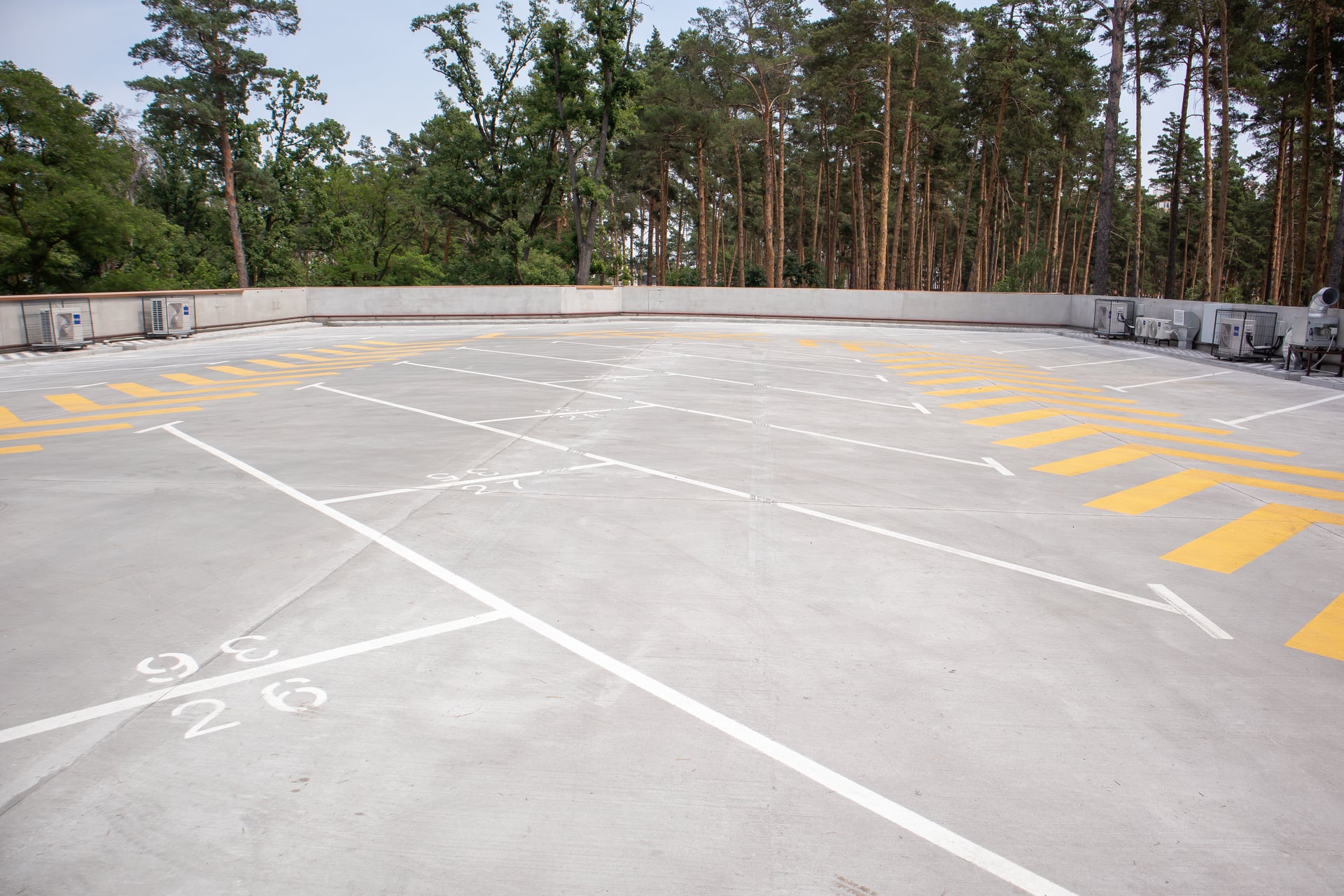
Professional parking lot striping improves safety, traffic flow, and curb appeal through clear space delineation. Lines should be 4 inches wide using high-visibility paint that maintains brightness through weather exposure. Angled parking (45 or 60 degrees) can improve traffic flow and ease of parking compared to 90-degree spaces, though its impact on overall capacity varies depending on specific lot dimensions and design.
Space orientation depends on lot dimensions and traffic volume. One-way traffic lanes require a minimum width of 10- 12 feet, while two-way lanes need 24 feet. Fire lanes must remain clearly marked and unobstructed, typically requiring a 24-foot minimum width for emergency vehicle access to allow two fire trucks to pass.
2. Directional Signage and Wayfinding Systems
Clear signage eliminates confusion and reduces traffic conflicts within parking areas. Entrance and exit points should be clearly marked with appropriate signage visible from reasonable distances. Usage signs designating visitor parking, employee areas, and reserved spaces help organize traffic flow and prevent unauthorized parking.
Wayfinding becomes particularly important in larger facilities where users might struggle to locate their vehicles or navigate to building entrances. Consistent signage design and placement create a professional appearance while serving practical navigation needs.
3. Traffic Control Markings and Stenciling
Pavement markings communicate driving rules and safety requirements directly to users. Stop bars, yield markings, and directional arrows guide traffic flow while crosswalk striping protects pedestrians. Stenciled words like “STOP” and “PEDESTRIANS ONLY” provide clear communication that transcends language barriers.
These markings require regular maintenance as faded markings create confusion and liability concerns. Yellow and white markings provide maximum visibility against dark asphalt surfaces, while proper stencil placement ensures messages are visible to approaching drivers.
Safety Infrastructure and ADA Compliance Requirements
Safety considerations extend beyond basic traffic flow to include physical barriers, accessibility requirements, and visibility standards. Commercial properties face significant liability exposure when parking areas fail to meet safety standards or ADA requirements.
Physical Safety Barriers and Speed Control
Speed bumps and raised markings control vehicle speed in areas with pedestrian activity or near building entrances. These features should be clearly marked and properly designed to slow traffic without damaging vehicles or creating accessibility issues for disabled users.
Wheel stops prevent vehicles from overextending into pedestrian areas or damaging adjacent property. Bollards protect buildings, utilities, and pedestrian areas from vehicle damage while clearly marking obstacles drivers should avoid.
Accessible Parking Standards and Placement
ADA-compliant accessible parking spaces require specific dimensions and placement to ensure usability. Standard accessible spaces measure 8 feet by 18 feet with an additional 5-foot access aisle. Van-accessible spaces need 8-foot access aisles to accommodate wheelchair lifts and ramps.
These spaces must be located on the shortest accessible route to building entrances and clearly marked with the International Symbol of Accessibility. The required number of accessible spaces depends on total parking capacity, ranging from one space for lots with 1-25 spaces to specific percentages for larger facilities.
Lighting and Visibility Requirements
Commercial parking lot lighting must meet Illuminating Engineering Society (IES) RP-20 standards for safety and security. Minimum horizontal illuminance levels vary by area, with basic security requiring 0.2 foot-candles and high-activity areas needing 5.0 foot-candles or more.
Uniform light distribution prevents dark spots where accidents or criminal activity might occur. Light pole spacing and fixture selection should provide adequate coverage while minimizing energy consumption and maintenance requirements. LED fixtures offer superior longevity and energy efficiency compared to traditional lighting systems.
Drainage Design and Surface Preparation
Proper water management prevents structural damage, extends pavement life, and ensures safe conditions for users. Poor drainage creates pooling water that accelerates pavement deterioration and creates slip hazards for pedestrians.
Proper Slope Requirements for Water Management
Effective drainage design requires a minimum 1% slope (1 foot of fall per 100 feet) for paved surfaces to ensure water flows away from buildings and prevents pooling. Steeper slopes may be necessary in areas with heavy rainfall or poor soil drainage conditions.
Drainage systems should direct water toward appropriate collection points, such as storm drains, retention basins, or permeable areas. Surface drainage works in conjunction with subsurface systems to manage both immediate runoff and groundwater issues that could undermine pavement stability.
Foundation and Base Layer Construction
Proper foundation preparation determines pavement longevity and performance under traffic loads. The subgrade must be properly compacted and stabilized to prevent settling that creates uneven surfaces and drainage problems. Poor foundation work leads to premature pavement failure regardless of surface material quality.
Base layer materials typically consist of crushed stone or gravel compacted to specific density requirements. Layer thickness depends on expected traffic loads and soil conditions, with heavy-duty applications requiring thicker bases to distribute loads effectively.
Asphalt vs. Concrete: Material Selection Guide
Material selection impacts initial costs, long-term maintenance requirements, and performance characteristics. Both asphalt and concrete offer distinct advantages depending on specific project requirements and environmental conditions.
1. Climate and Weather Considerations
Asphalt performs better in cold climates due to its flexibility during freeze-thaw cycles. The material’s dark color absorbs solar energy, helping melt snow and ice more quickly than concrete surfaces. However, extreme heat can cause asphalt to become soft and susceptible to rutting under heavy loads.
Concrete excels in hot climates where its light color reflects sunlight and reduces surface temperatures. This high albedo characteristic can lower surrounding air temperatures and contribute to reducing building cooling costs. However, concrete can crack when subjected to repeated freeze-thaw cycles without proper installation techniques.
2. Durability and Maintenance Requirements
Concrete parking lots can last 20 to 50 years with proper installation and maintenance, demonstrating superior durability under heavy vehicle traffic. While initial costs are higher, concrete’s longevity often provides better long-term value for high-traffic commercial applications.
Asphalt parking lots typically require sealcoating every 2-3 years and regular striping maintenance to protect against weather damage and oxidation. This regular maintenance preserves appearance and structural integrity but represents ongoing operational costs that must be factored into total ownership expenses.
3. Cost Analysis and ROI Factors
Initial installation costs range from $3 to $7 per square foot for asphalt compared to $10 to $13 per square foot for concrete. However, total cost of ownership includes maintenance expenses, expected lifespan, and potential energy savings from reflective concrete surfaces.
Asphalt’s lower initial cost appeals to budget-conscious property owners, but frequent maintenance requirements can result in higher lifetime expenses. Concrete’s durability and low maintenance needs often provide superior return on investment for properties expecting heavy, long-term use.
4. Installation Timeline and Business Impact
Asphalt installation typically requires 2-3 days from start to traffic-ready surface, minimizing business disruption during construction. The material cures quickly, allowing faster return to normal operations compared to concrete alternatives.
Concrete installation and curing can take up to 7 days before the surface can support vehicle traffic. This extended timeline may create challenges for businesses that cannot afford prolonged parking disruptions, though proper project scheduling can minimize operational impacts.
Selecting Qualified Paving Contractors
Contractor selection directly impacts project quality, timeline adherence, and long-term performance. The complexity of commercial parking lot construction requires specialized knowledge and proper credentials to ensure successful outcomes.
Required Credentials and Insurance Coverage
Qualified paving contractors must carry complete insurance coverage, including general liability, workers’ compensation, and professional liability policies. Verify current licensure and bonding status before engaging any contractor for commercial projects.
Industry certifications from organizations like the National Asphalt Pavement Association or American Concrete Pavement Association demonstrate commitment to professional standards and continuing education. These credentials indicate familiarity with current best practices and regulatory requirements.
Specialized Knowledge for Commercial Projects
Commercial parking lot construction requires an understanding of ADA compliance, drainage engineering, traffic flow optimization, and local building codes. Contractors should demonstrate previous experience with similar projects and provide references from satisfied commercial clients.
Technical knowledge includes proper base preparation, material selection for specific applications, and quality control procedures that ensure long-term performance. The best contractors provide detailed project specifications and maintain open communication throughout the construction process.
Professional Commercial Parking Lot Design
Successful commercial parking lot projects require careful planning, quality materials, skilled installation, and ongoing maintenance considerations. From initial site assessment through final striping and signage installation, every detail contributes to creating functional, attractive, and compliant parking facilities.
The investment in professional design and construction pays dividends through reduced liability exposure, improved customer satisfaction, and lower long-term maintenance costs. Property owners who prioritize quality in their parking lot projects create valuable assets that serve their businesses effectively for decades.
Avello Asphalt & Construction Corp
141 Daley Road
Poughkeepsie
NY
12603
United States